“I’m an 800 runner, and long-distance running is not my thing. But I think doing a marathon on every continent would be amazing. I love traveling and meeting new people. It’s definitely something I want to do—it’d be cool to incorporate running to traveling. And then racing a race in each state, whether that’s collegiately and traveling for that, or post-grad. It’d be cool to do an any-distance-in-any-state type of thing. So anywhere from 5K to 10K, half marathon to full [marathon].”
“My darkest times have been both of my freshman years. In high school, my freshman year, it was my first season running cross-country, and I played soccer at a pretty high level, so I did both at the same time. I was on a state runner-up soccer team, as well as being an all-state cross-country runner. It was a tough balance, and it was my first year of high school. I remember one day in the middle of the season just going out for a normal run with my senior captains and all my best friends, and I just remember breaking down, crying, stopping, and I just curled up in a little ball. I look back to them picking me up and pushing me through it all, teaching me that everything is gonna be all right. I correlate that with my freshman year here, because I had similar leadership in our captains. I had some pretty awful races my freshman year. It was just as similar, even though there wasn’t soccer involved. College is hard, classes are hard, training at this level is really hard. So those two freshman years were hard.”
“The harshest [running] times are when you go into a race and you’re really fit and really ready and really excited, and you just run awful, and there’s no reason why. You question everything. You question your talent, you question your preparation, you question if you’re cut out for it, you question if you’re mentally tough. You just question everything, and it’s really hard to bounce back from those [races] more so than injury. You just have no idea why it went so horribly. It’s hard to go into the next race after that happening. How do you get your confidence back? How do you feel ready to race again? Those have been the darkest times, but I’m lucky because Coach [Mike] McGuire has invested a lot of time and energy and resources in me, and helping make sure I’m prepared. So usually when that happens, I’ve been able to either get stronger the next year from it or get stronger the next race. It’s just been a huge learning process.”
“I was injured my sophomore cross-country year and my junior year, so I went two consecutive cross-country seasons of battling injuries, trying to help out my team to win Big Tens—it’s always been a back-and-forth battle between Michigan State. It’s been really, really tough. For some reason, I train too hard in the summer after track season, and I end up getting injured in cross-country. I think the hardest moment for me was my junior year when I ended up fracturing a bone in my foot after just months and months of trying to avoid that. And I did that at Pre-Nats, and the following weekend was Big Tens, and our team ended up winning [Big Tens]. It was really bittersweet for me, because I wanted to be a part of it, but I was so happy for them. And at the same time, I was like, ‘Gosh, you don’t get a championship every year.’ We’ve been battling the last two years, and we’ve gotten beat by Michigan State the last two years. I think my teammates wanted to share it with me, but at the same time, it’s different when you’re not in the race or you don’t get to run. After that, I was hungry—I wanted to help the team, I wanted to be a part of a championship. Finally last year, my senior year, I was healthy, and we almost won the Big Ten meet, but the biggest thing was that we got fourth at nationals. That was really, really incredible. That’s almost as cool as winning a championship. It was nice to finally share that with my teammates.”
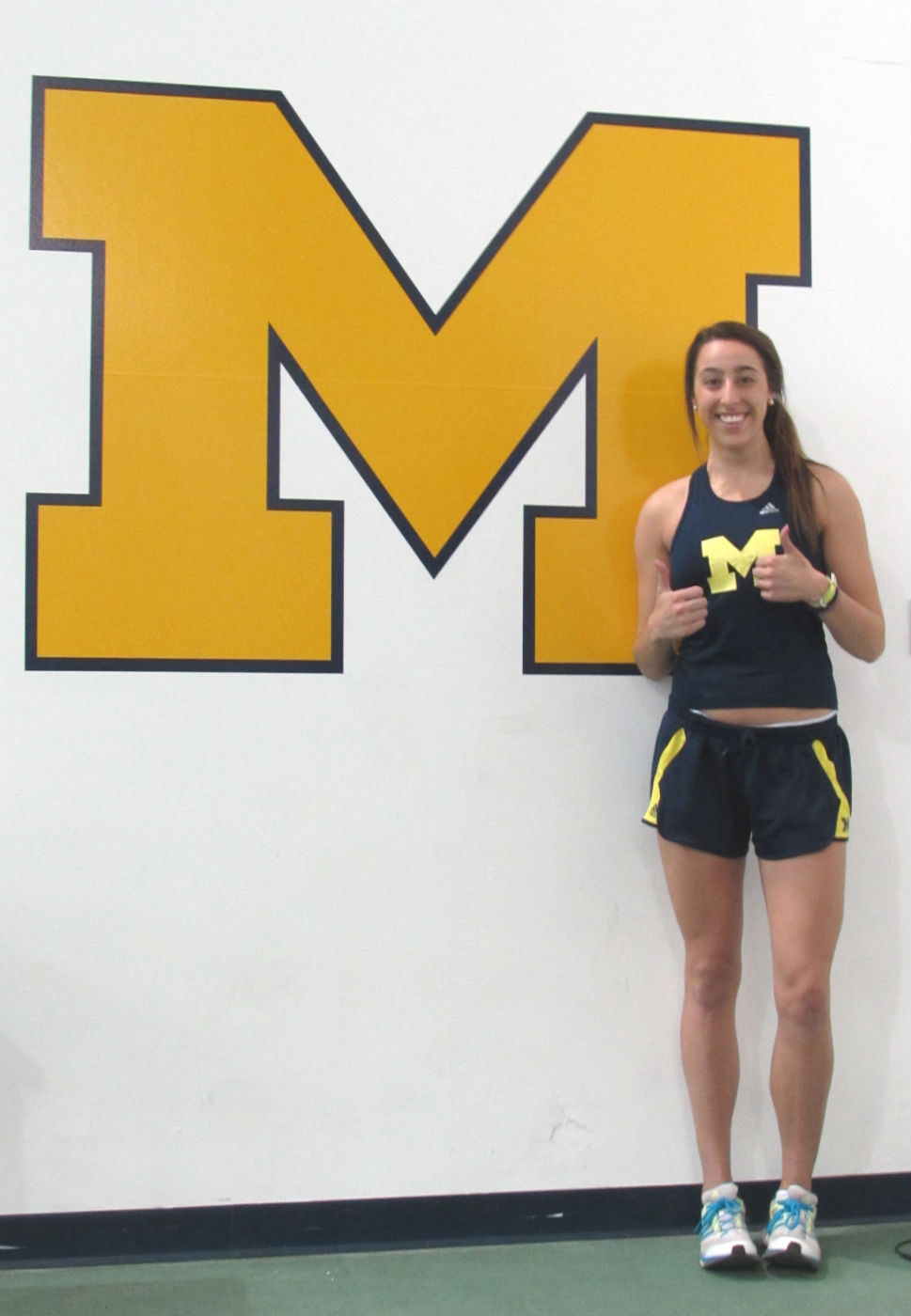
Photo by James Rogers
“Describe that feeling of being fourth at nationals.”
“You know what, we got done, and we were so cold and so defeated in a way, that we were like, ‘Wow, that wasn’t good. Man, it was so tough.’ We’re all just freezing cold, and we got out, and everybody was like smiling and so happy, and we’re like, ‘What happened?’ And then we hear we got fourth, and we’re like, ‘There’s no way we got fourth.’ And we ended up actually getting fourth. We just were ecstatic—that’s what happens when everybody finishes a race and feels like they couldn’t have given anything else. It was defeating because we all were so tired, and we felt like it didn’t go well because it was one of the hardest races that we had ever run. It was 19 degrees, there was ankle-deep mud and water the entire race, so when you get done, you don’t know how you did, because the times aren’t fast, you feel like you’re drowning the whole time. … To share that with your teammates is something that you never forget. It’s hard to explain what it does feel like. It’s unlike any individual thing that I’ve ever accomplished.”
“What’s still on the running bucket list?”
“I don’t have an outdoor season anymore, but I specialize in the steeplechase, and I ran 10:02 last year. I would do anything to break the 10-minute barrier. I’d also like to go to USAs this year. I do think I’m going to give it another run.”
“My darkest running moment was from my sophomore year during track season. I had a really bad ankle sprain. I was working out and going over the barriers, and on the water jump on one of the intervals, my foot was just twisted there, and I came down on it and sprained it really bad. Everyone thought it was broken, but luckily it wasn’t—it was just a very severe sprain. So I had to go through about six to eight weeks of rehab. I was in a walking boot, on crutches. Eight weeks later was when I was able just to start jogging, very light jogging. During that month-and-a-half to two months, it was pretty frustrating because I was just out of the loop, and it was hard to see the end of the injury. What kept me seeing through it all was continuing to be on the rehab and making sure I was doing everything I possibly could to get better and as fast as I could. I would try to put myself into team situations or events and just talk to people as much as I could. Without running, without practice every day, you don’t get that aspect as much. … Coach [Mike] McGuire is very supportive, and he’ll tell you to listen to your body and make sure you’re not overdoing it our pushing too hard. He doesn’t want [an injury] to get worse, obviously. He’s very encouraging, and he believes in you, which is the biggest thing that helps you get through something like that.”
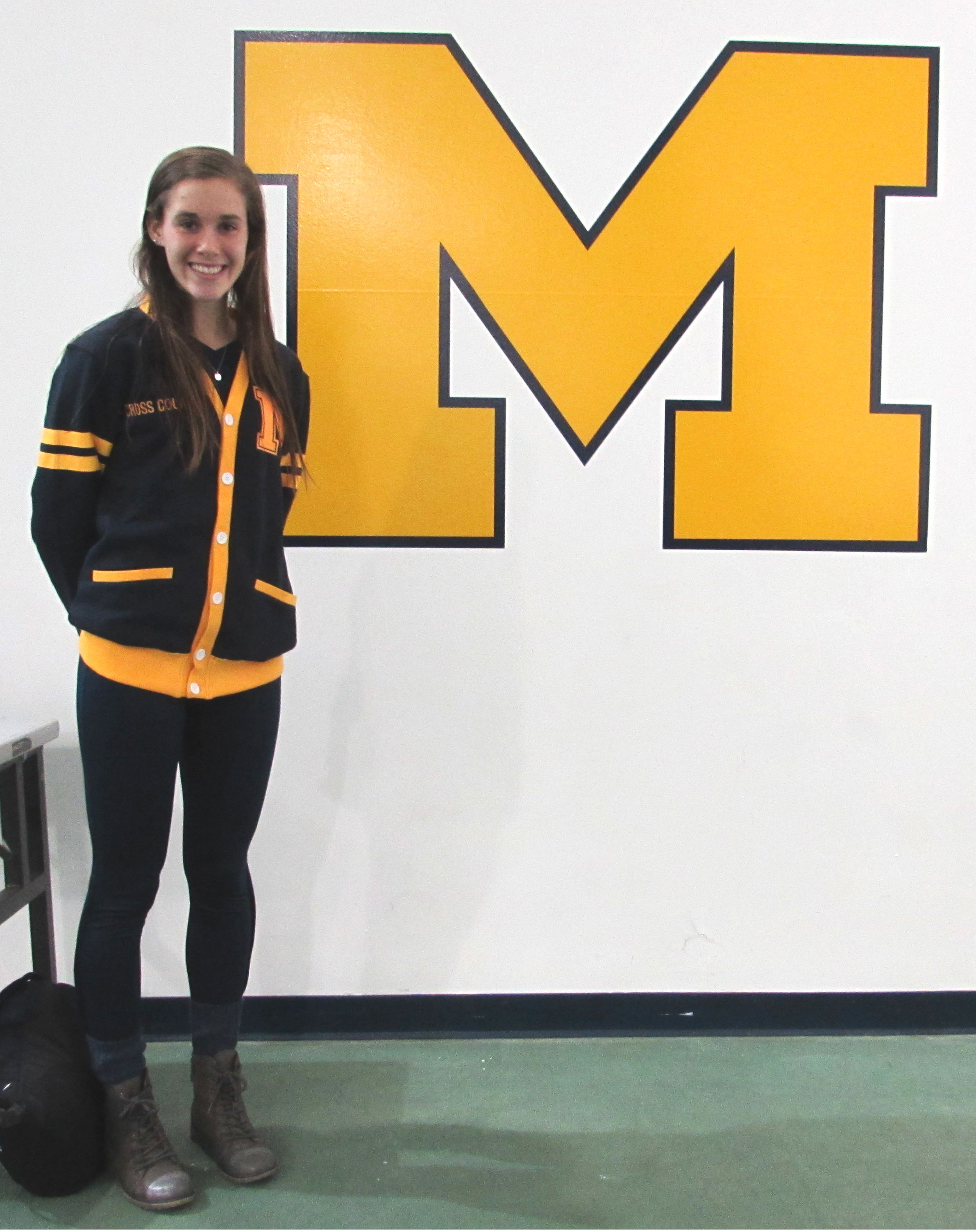
Photo by James Rogers
“I definitely want to do a half marathon officially in a race. We do [13.1 miles] in a long run every week, but I’d like to do a half marathon race. After that, I want to do a marathon. Eventually, I would like to do at least one triathlon and one Ironman. This is kind of the sequence of events that I eventually want to get done. I want to do all those things at least once, and then after that maybe see if I like one particular thing or the other. I definitely still want to have that competitive edge when collegiate running is done.”
“I’m a high school senior, I’ve narrowed my college decision down to Michigan and three other schools, I want to run. How would you pitch Michigan to me to convince me to come here for running and academics?”
“I could relate, because I was down to Michigan and a few other schools, and what really sold me was the academics here and just the history and the tradition of all the athletic programs—especially women’s cross-country in general, and with Mike McGuire being such a highly respected coach. To be an athlete under him, I knew I’d be able to reach my potential, and he’d be able to turn me from being an average high school runner to a pretty good collegiate runner. I’d tell a high school senior to look at the history and all the runners he’s coached and what he’s done.”




 Hooray Run