The Michigan State University women’s cross-country team captured the NCAA Division I national title on Saturday in Terre Haute, Indiana, but I have to believe the MSU football team’s 42-point drubbing of Rutgers received more coverage over the weekend.
Regardless, I’m here to celebrate the cross-country title and the sensational 2014 season put together by the Spartans. A team from the Mitten taking home a national championship trophy makes me, a Michigan resident, proud.Continue reading →
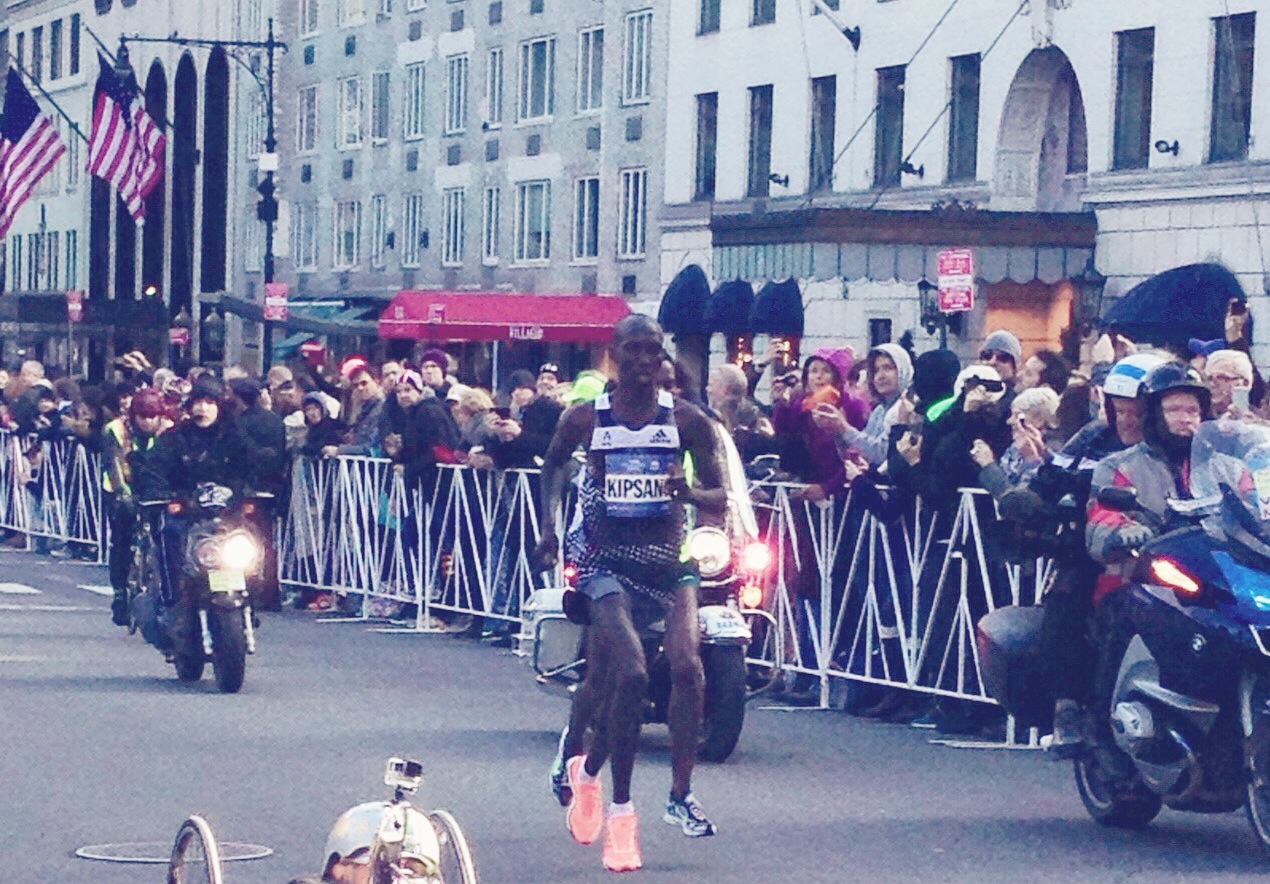
Wilson Kipsang leads the men’s race around mile 25 on Sunday.
Photos by Bethany Rogers
Those racing the 2014TCS New York City Marathonfaced difficult wind gusts, and over 50,000 took on the blustery conditions.
The wind quieted talks of course-record attempts, but Kenya’s Wilson Kipsang (2:10:59) and Mary Keitany (2:25:07) represented their country well with first-place finishes.
Men: Kipsang Has $600,000 Payday
Kipsang won in 2:10:59 in his NYC Marathon debut. He fought off Ethiopia’s Lelisa Desisa (2:11:06) for the $100,000 victory prize, also claiming theWorld Marathon Majorstitle. The 32-year-old Kipsang takes home an additional $500,000 for the WMM triumph.
Kipsang, who is sponsored by adidas, was celebrated by adidas Running:
Kipsang has a 2:03:23 marathon PR to his name, a then-world record run in Berlin in 2013. He won the London Marathon in 2012 and 2014, and he ran 1:01:02 to win the 2013 NYC Half Marathon. Kipsang is a menace to opponents on the roads.
Here are the top 10 men from Sunday:
1. Wilson Kipsang (KEN) — 2:10:59
2. Lelisa Desisa (ETH) — 2:11:06
3. Gebre Gebremariam (ETH) — 2:12:13
4. Meb Keflezighi (USA) — 2:13:18
5. Stephen Kiprotich (UGA) — 2:13:25
6. Geoffrey Mutai (KEN) — 2:13:44
7. Masato Imai (JPN) — 2:14:36
8. Peter Cheruiyot Kirui (KEN) — 2:14:51
9. Ryan Vail (USA) — 2:15:08
10. Nick Arciniaga (USA) — 2:15:39
The American men put three in the top 10, a nice showing for USA distance running. Meb won NYC in 2009 and the Boston Marathon earlier this year, and he led the American charge with a fourth-place finish on Sunday.
Meb, Vail and Arciniaga were the three Americans in the top 10, and here are the next five USA finishers:
Keitany defeated fellow Kenyan Jemima Sumgong by three seconds, crossing the line in 2:25:07. The marathon’s official Twitter account captured Keitany’s win:
Prior to this victory, the 32-year-old Keitany posted back-to-back wins at the London Marathon (2011, 2012). She holds a marathon PR of 2:18:37—the third-fastest woman ever.
Here are the top 10 women from Sunday:
1. Mary Keitany (KEN) — 2:25:07
2. Jemima Sumgong (KEN) — 2:25:10
3. Sara Moreira (POR) — 2:26:00
4. Jelena Prokopcuka (LAT) — 2:26:15
5. Desiree Linden (USA) — 2:28:11
6. Rkia El Moukim (MAR) — 2:28:12
7. Firehiwot Dado (ETH) — 2:28:36
8. Valeria Straneo (ITA) — 2:29:24
9. Buzunesh Deba (ETH) — 2:31:40
10. Annie Bersagel (USA) — 2:33:02
Linden, who runs for Hansons-Brooks, gutted out a top-five finish to lead the Americans. Brooks Running congratulated Linden and Vail for their Sunday performances:
This Sunday, Sam Hartman is running the Foster Swift Half Marathon in Grand Rapids, Michigan. Sam is running 13.1 miles for her sister, Sophie, who is trying to finalize the adoption of two girls—biological siblings and Sam’s nieces—in Zambia.
The adoption system is extremely corrupt in Zambia, and Sophie has been in this process for four years now, struggling in areas to continue on. Finances are the last thing Sophie wants to think about, but they are necessary for the continued fight of long-suffering.
Sam is taking pledges for each mile she runs on Sunday, and every dollar goes toward the adoptions. If you feel inclined and are able, help the Hartman family in this journey.
Check out the following links—even if you don’t know Sam. Fill a row in the spreadsheet to help support Sam and her half marathon, donate to the Sophie Hartman Adoption Fund and/or show some love at Sam’s half marathon Facebook page!
This past summer, I ran my first full marathon in Charlevoix, a small town in northern Michigan. Now, I must admit that I took a rather laid-back approach to the whole thing at first. But believe it or not, talking about running 26.2 is quite a bit easier than running 26.2.
So I went through the extensive training. When you’re training alongside your dad who has not missed a single day of running for the past 29 years, this training involves no rest days.
It was definitely taxing—physically, mentally, you name it. There would be 90-degree days in the beginning of June that didn’t necessarily make me want to go for a 16-mile run. But you have to do it. You have to put in the effort and the time if you want to reap the payoff.
And then race day comes along, and you realize that all of those crazy weeks of training have come down to this. It’s kind of daunting, kind of super cool, kind of unnerving.
So there we are at the start; and soon we’re off. The first five miles fly by, and forgetting the fact that I have 21 more to go, I start to think, “Wow, this is great. I love this. Man, I feel alive.”
So naturally, I surge forward and enjoy the next five miles or so. And then after a little while, I stop enjoying myself. Now, the Charlevoix Marathon happens to be an out-and-back course, which means that when you hit the halfway mark, you then turn back and retrace your steps for the remaining 13.1.
Photo by Linda Rogers // Bethany and her dad, Randy Rogers, all smiles after 26.2.
Needless to say, I had been a bit too eager during the first half of the race and could not wrap my head around the fact that I had to do all of it again. So for the next few miles, I was a mess.
I felt tired; I felt like I was in over my head; I actually entertained the thought of what would happen if I collapsed and was stranded out on the course. I guess when you have that much time to think, your imagination does all sorts of fun things.
But then, shortly after mile 17, I came over this hill (barely), and there in front of me was perhaps the most beautiful panoramic view of Lake Michigan I had ever laid eyes on. Gosh, if I had had any extra breath, it would have taken my breath away.
You see, I was feeling weak at that point. I was feeling really weak. But at that moment, I just felt a rush of new strength; and I think that’s what has always been so enthralling to me about running—the sweet paradox of it all.
Running can totally strip you of your strength only to reveal that there is even more there than you had originally conceived, that amid the great weakness rests undeniable power—to press on, to push through, to move forward, to go on the strength that ordinarily doesn’t seem necessary.
And so you do. In the case of my marathon, I pushed through the last nine miles or so. In the case of an everyday run, it might be a matter of pushing through a 10-minute rough patch or those last three miles. Whatever the case may be, you do it. And you grow.
How sweet to experience the strength that only weakness can make known.
A group of first-graders sporting blue T-shirts gathers in a classroom right after a Tuesday school day concludes at Hemmeter Elementary in Saginaw, Michigan.
For any first-grader, another 1:10 at school may be displeasing, but when the additional hour-plus entails putting one foot in front of the other and snacking on apples and string cheese after the exercise, positive energy is difficult to contain.
When over 20 kids finally settle in the classroom, another session of Kids Run the Nation is underway. The day before, fourth- and fifth-graders met. The next day would be the kindergartners’ turn. Thursday would make way for the second- and third-graders.
***
KRTN—a national after-school running program teaching children about the sport and encouraging a healthy lifestyle—piloted in Saginaw at Handley Elementary in March 2013. Not even two years old, the Saginaw Community Foundation and the Dow Corning Donor Advised Fund each donated $8,000 to KRTN-Saginaw in August 2014.
“The funds are to be utilized for program expansion so interested schools and sites can contact us,” Denise Nightingale, KRTN-Saginaw’s program coordinator, said.
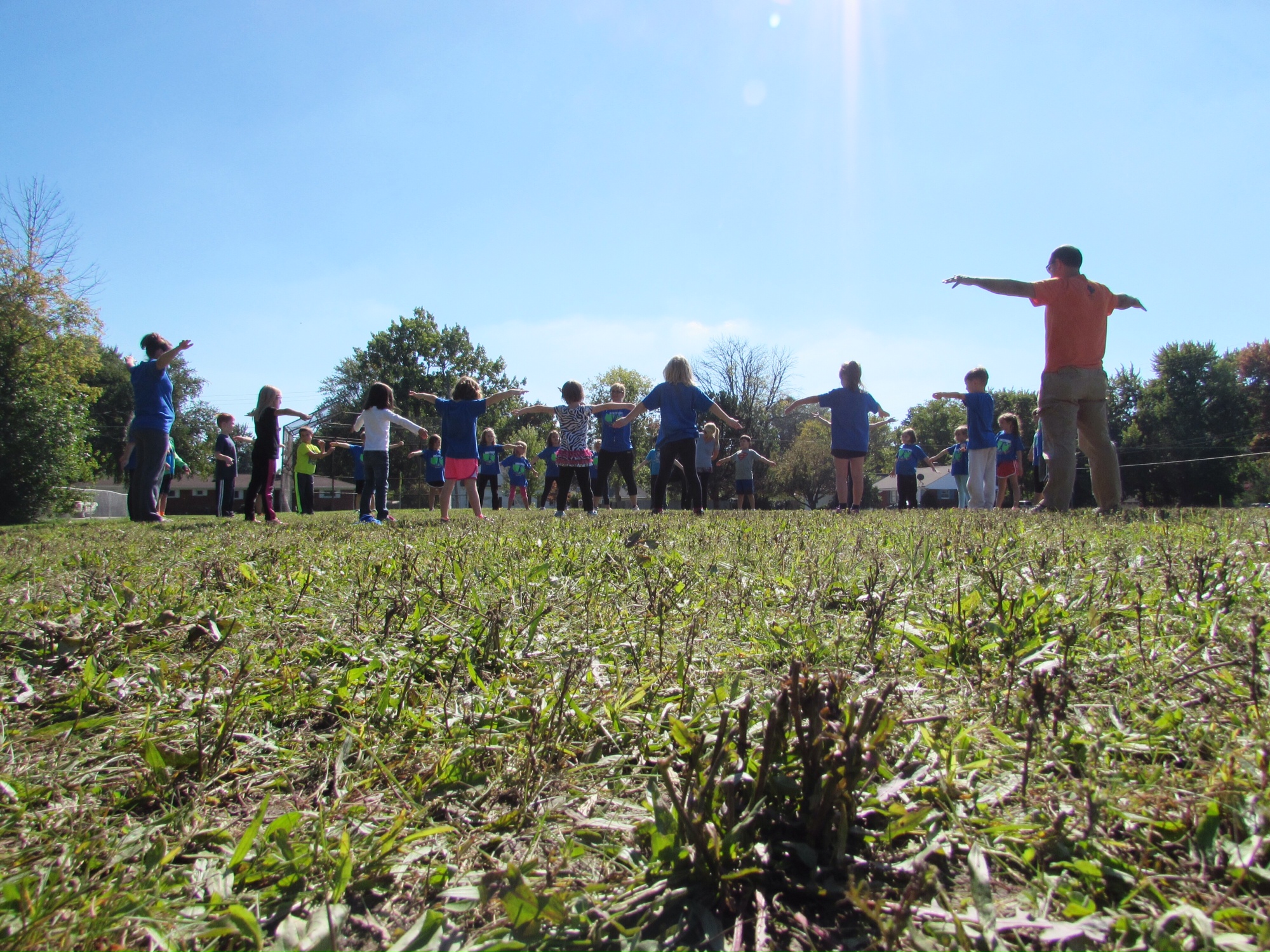
The first-grade group at Hemmeter goes through a series of stretches before running.
After launching the program at Handley in 2013, KRTN-Saginaw has landed at Hemmeter, Westdale, Loomis Academy, Nouvel, St. Charles and Merrill elementaries.
“Since March of 2013, we’ve had 440 students participate in the program and introduced them to running as a sport,” Nightingale said. “Personally, the program was brought to this community because I wanted my boys to get a glimpse of why their mom loved racing. Honestly, I know running is not for everyone. Sometimes, I even doubt it’s for me!”
Nightingale continued: “I wanted young kids to learn about the sport, learn about healthy living and that running is just one activity that they can do to stay healthy. I wanted them to learn about setting a goal and having the feeling of accomplishment of meeting that goal with the race—my favorite part.”
First-grade Hemmeter students stretching post-run and then refueling before departure.
The participation numbers will continue to grow as parents and children alike recognize the benefits and joy of running. Plus, thanks to local and national grant support, the 10-week program costs parents just $10—$1/week—for one child. The program began with an initial fee of $30.
“It was always a goal to make running and this program accessible to all families with boys and girls, and thanks to funding support, we can offset the cost to families,” Nightingale said. “We do plan on continuing to raise funds so that we can sustain the program for years to come.”
At Hemmeter, each grade (K-5) meets once a week. 10 weeks, 10 sessions for each child. The program finishes with a one-mile race in November.
***
The first-graders at Hemmeter shuffle out of the classroom and depart for an open field adjacent to the school. As expected, a single-file line is tough to maintain, especially when a few speedsters want to be the first to drop their water bottles and get moving.
Water bottles are crucial on this day—nearly 75 degrees with an aggressive sun and not a cloud in sight. A beautiful day, yes, but a bit warm following a week of cooler temperatures more like Michigan fall weather.
Week 2 of the 10-week program is about pacing. Many of the kids had probably never heard the word “pace” in relation to running, but that’s one of the beauties of KRTN: children expanding their knowledge of the sport.
The group circles up for a stretching session. A few games of Simon Says warm up the muscles even more, especially one led by an energetic youngster eager to get running.
A collective stretch and a student-led game of Simon Says occur before the running.
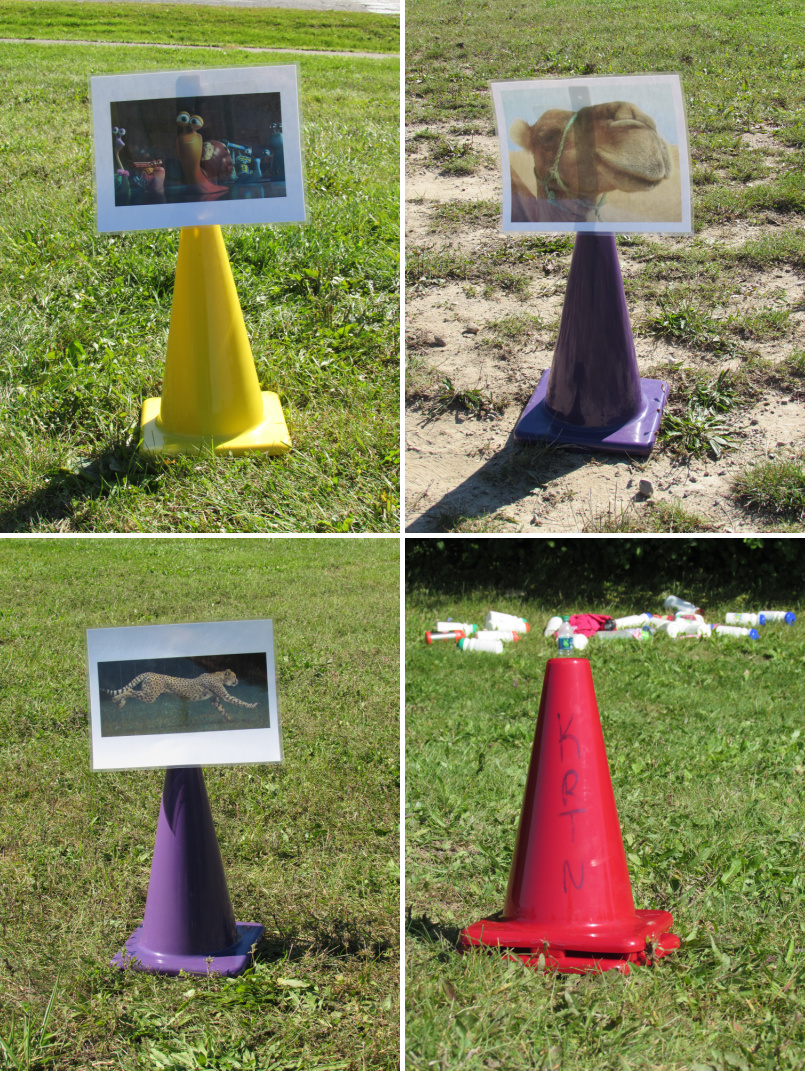
After a few more warm-up drills, the kids are ready to move around the cones set up at four corners of the field. The site coordinator then shows the kids three photos, each one depicting a different animal.
One photo is of a snail, another is of a camel and the final photo pictures a cheetah in motion. As expected, the cheetah elicits the most excitement from the kids. Each photo makes its way to its respective cone. The fourth cone has “KRTN” written on it and is closest to the pile of water bottles.
The students break off into separate groups, one group to each cone. When you arrive at the snail cone, you walk. At the camel, you jog. When you meet the cheetah, it’s time to let the legs fly. Pacing. Walk, jog, run.
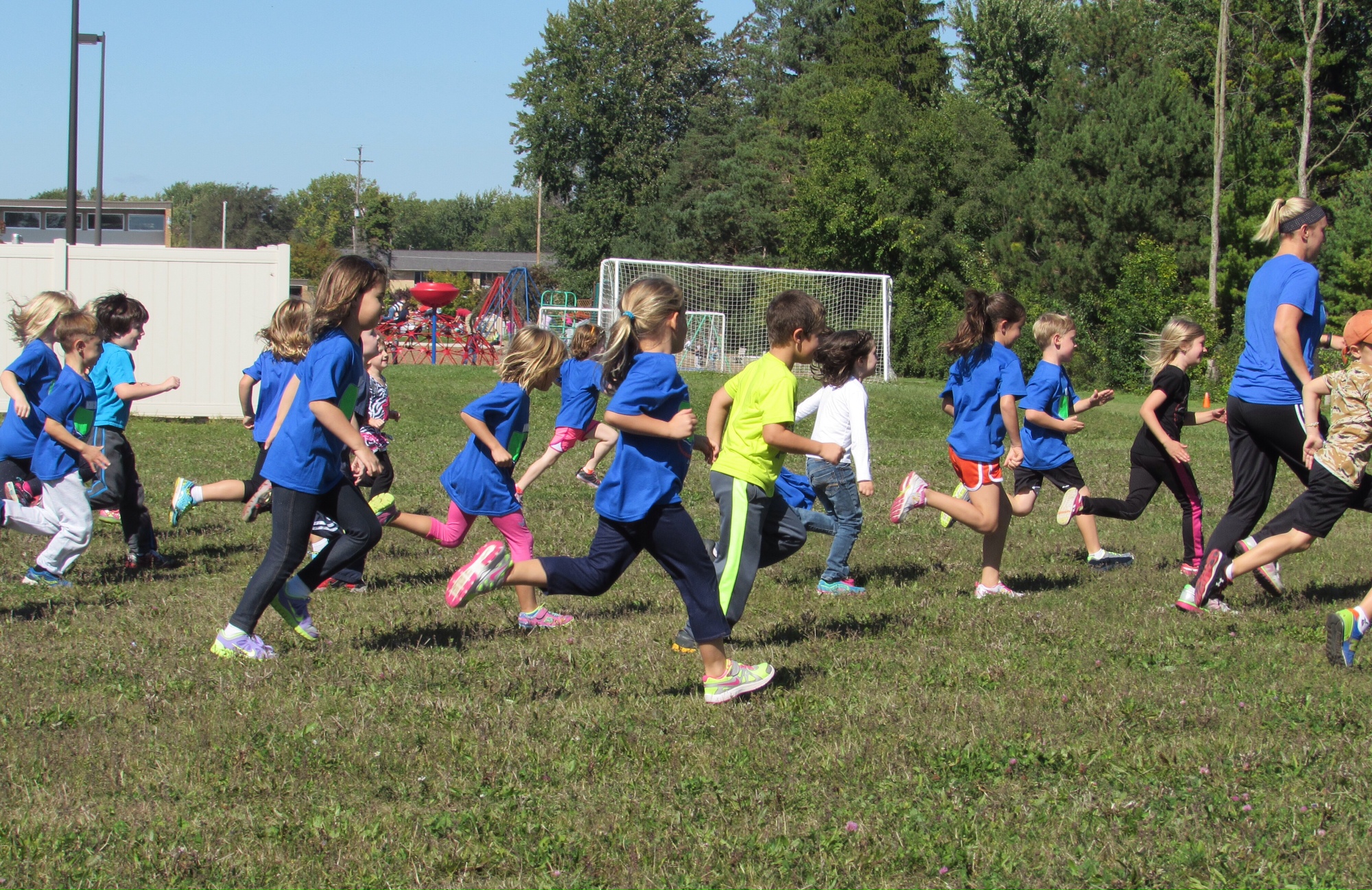
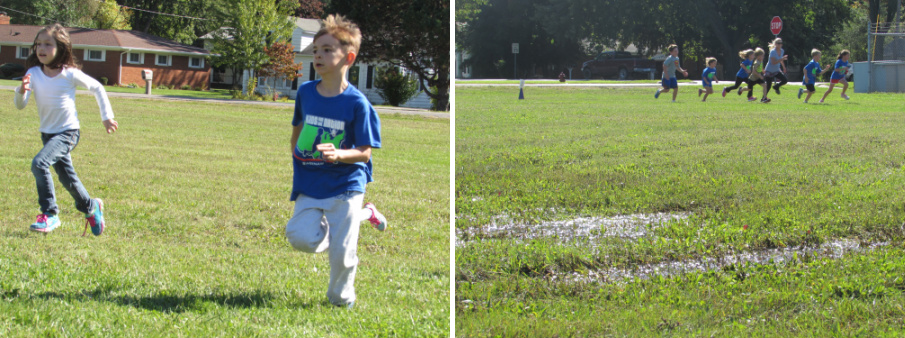
The cones guide the students as they run.
Water breaks are encouraged but not mandatory. A few kids keep running with no stops. The sun continues to beat down, and the adult leaders not only provide encouragement, they also run with the kids.
Several adult vs. children races take place. Conversely, a few kids can’t wait to get back to the snail. Whatever the approach, the feet keep moving. Sweat continues to hit the grass.
Some students count their laps, others challenge each other at the cheetah. Competitive spirits ignite, as do attempts at extended water breaks. Whatever the case, the atmosphere remains conducive to mobile activity, and it remains fun.
Races against fellow classmates—and adults—make for friendly competition.
It’s evident some kids want to keep running, but cool-down exercises call. It’s almost 3:45 p.m.—the end time for the first-grade session. Rides home are about to arrive.
Post-run stretching complete, the students find time to get every last drip out of the water bottles, squeezing the remaining ounces onto their own heads or a friend’s head. A literal cool-down. It’s enjoyable to see how much energy exists after the running.
The group joins in on a KRTN cheer that induces the most enthusiastic shouts. Honestly, this chant sounds genuine and passionate. For the next eight weeks, the cheer will only get louder, and the energy will continue to elevate.
Water bottles are emptied in a fury of laughter and soaking. Next up: snack time.
Today’s energy, however, gradually dwindles as the kids stride back into the classroom for snack time—the final part of the session. It’s part of the learning process: run, refuel, rest. The snacks provided are apples and string cheese. Conversation ensues between classmates who are now further connected because of running.
Several take a seat on a classroom rug that provides a map of the world. Kids certainly play a part in running the nation, and the world. Maybe one first-grader’s attachment to running will someday lead to steps beyond borders. Maybe another’s generosity will someday lead to a more peaceful world.
Whether running is a part of their lives down the road or not, KRTN-Saginaw is currently opening young students’ eyes to the jubilation the sport can provide and the lessons it can teach. It’s almost a given these first-graders look forward to each KRTN Tuesday with anticipation.
“If each kid has fun while learning about the sport, then I’ve done my job,” Nightingale said.
You’ve done your job, and then some.
Visit KRTN’s websitehere, and check out KRTN-Saginaw’sFacebookpage.






 Hooray Run